
Call us now :+8613306412803
 Send Inquiry

 Send Inquiry
Inverted Rail Welding Robot Machine 180000Lux Light Resistance
Price 23100 USD ($)/ Unit
MOQ : 1 Unit
Inverted Rail Welding Robot Machine 180000Lux Light Resistance Specification
- Product Type
- Inverted Rail Welding Robot Machine
- General Use
- Automated welding in industrial manufacturing
- Material
- Heavy-duty engineering steel, alloy components
- Type
- Rail-Mounted Welding Robot
- Capacity
- Customized as per welding requirements
- Weight (kg)
- Approx. 1600 kg
- Computerized
- Yes, CNC and PLC supported
- Automatic
- Fully automatic operation
- PLC Control
- Yes, integrated PLC control system
- Power Source
- Electric
- Power Consumption
- Standard 3-phase, 380V (customizable)
- Rigidity
- High structural rigidity for industrial welding
- Voltage
- 380V / Customizable
- Motor
- Servo Motor with precise positioning
- Table Size
- Not Applicable (rail mounting)
- Axial Choice
- Multi-axis (robotic arm)
- Dimension (L*W*H)
- Approx. 3000 x 1800 x 2400 mm
- Feature
- Low Energy Consumption, High Speed, High Precision
- Color
- White, Red and Silver
- Warranty
- Yes
- Operation Mode
- Remote operation and programmable sequences
- Application
- Suitable for automotive, shipbuilding, heavy machinery and rail industry
- Light Resistance Capability
- 180,000 Lux (suitable for extremely bright environments)
- Robot Arm Reach
- Up to 1.8 meters (customizable with model)
- Cooling System
- Forced air / optional water cooling for welding torch
- Rail Length
- Configurable, standard starts at 3m and up
- Welding Method
- Supports MIG/MAG/TIG/SMAW depending on configuration
- Ambient Temperature Range
- -10C to 45C
- Control Interface
- Touchscreen HMI, remote programming
- Installation
- Rail-mounted, inverted structural design for overhead and narrow area operations
- Safety Feature
- Integrated sensors for operator and equipment safety
Inverted Rail Welding Robot Machine 180000Lux Light Resistance Trade Information
- Minimum Order Quantity
- 1 Unit
- Supply Ability
- 10 Units Per Day
- Delivery Time
- 30 Days
Inverted Rail Welding Robot Machine 180000Lux Light Resistance About
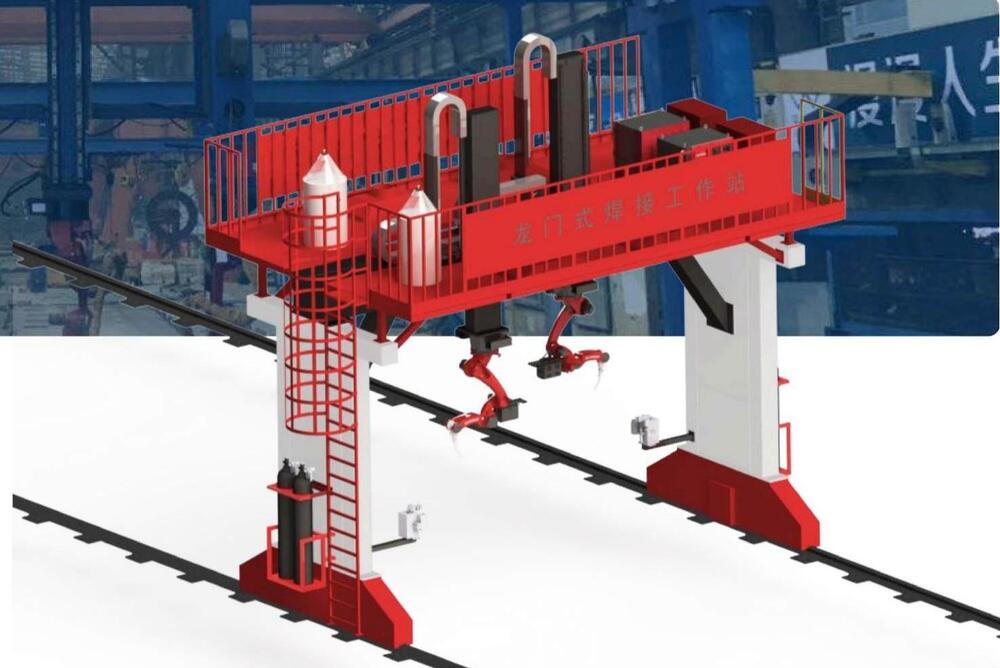
This robot features an inverted track, employing suspension or inverted installation for precise position control and expanded working range. It is suitable for workpieces with a width 3M and a height 500MM, such as bridge slabs.
This system can be expanded with Y and Z axes to form a 9-axis cantilever, further increasing the working range. Combined with multiple 3D vision systems, multiple workpieces can be modeled from a single photograph.
Exceptional Light Resistance for Enhanced Versatility
With light resistance capability of up to 180,000 Lux, this robot excels in exceptionally bright settings, ensuring reliable sensor performance and safe operations. Whether factories or shipyards feature extreme lighting, the system maintains its efficiency-making it ideal for industries where laser precision in welding is vital, despite challenging ambient conditions.
Advanced Multi-Process Welding Technology
This rail-mounted robot supports extensive welding processes, including MIG, MAG, TIG, and SMAW, accommodating the unique needs of a variety of industrial environments. With a customizable arm reach and a configurable rail length, the robot can tackle projects of varying size and complexity with precise control and repeatability.
Automated Controls and Safety Features
Outfitted with a touchscreen HMI, remote programming, and integrated sensors, this welding robot prioritizes operator and system safety. Programming flexibility enables the creation of automated welding sequences, while fully automated operation and advanced safety controls minimize manual intervention and potential hazards in demanding workspaces.
FAQ's of Inverted Rail Welding Robot Machine 180000Lux Light Resistance:
Q: How does the inverted rail design benefit welding operations in confined or overhead spaces?
A: The inverted rail-mount structure allows the robot to operate effectively in overhead and narrow workspaces, expanding its usability in locations where floor-mounted robots cannot reach. This makes it ideal for applications in ship hulls, undercarriages, and inside industrial frameworks that require precision welding above or within limited areas.Q: What industries can utilize this welding robot, and what applications is it best suited for?
A: This welding robot is well-suited for automotive manufacturing, shipbuilding, heavy machinery production, and the rail industry. Its adaptability to various welding methods, high precision, and robust structure make it perfect for high-volume, repetitive industrial welding tasks that demand speed and accuracy.Q: What welding methods are supported, and can the robot accommodate different project requirements?
A: The system supports MIG, MAG, TIG, and SMAW welding processes, making it highly versatile. The welding method can be configured according to project requirements, ensuring optimal results for a wide variety of metals and joint types.Q: How is operator safety ensured during the robot's operation?
A: Safety is prioritized through integrated sensors that monitor both the environment and the equipment. These sensors detect obstacles, temperature fluctuations, and possible hazards, preventing accidents and ensuring the protection of both operators and machinery during automated welding cycles.Q: What are the control and programming options available for this robot?
A: Operators can control the robot using a touchscreen HMI, remote programming interface, or preset programmable sequences. The robot is CNC and PLC compatible, allowing for precise motion control, repeatability, and advanced automation tailored to specific manufacturing processes.Q: When is water cooling recommended for the welding torch, and is it available as an option?
A: Water cooling is recommended for applications involving extended welding periods or high thermal loads to enhance torch longevity and welding quality. The system includes forced air cooling as standard, with water cooling available as an optional upgrade for demanding projects.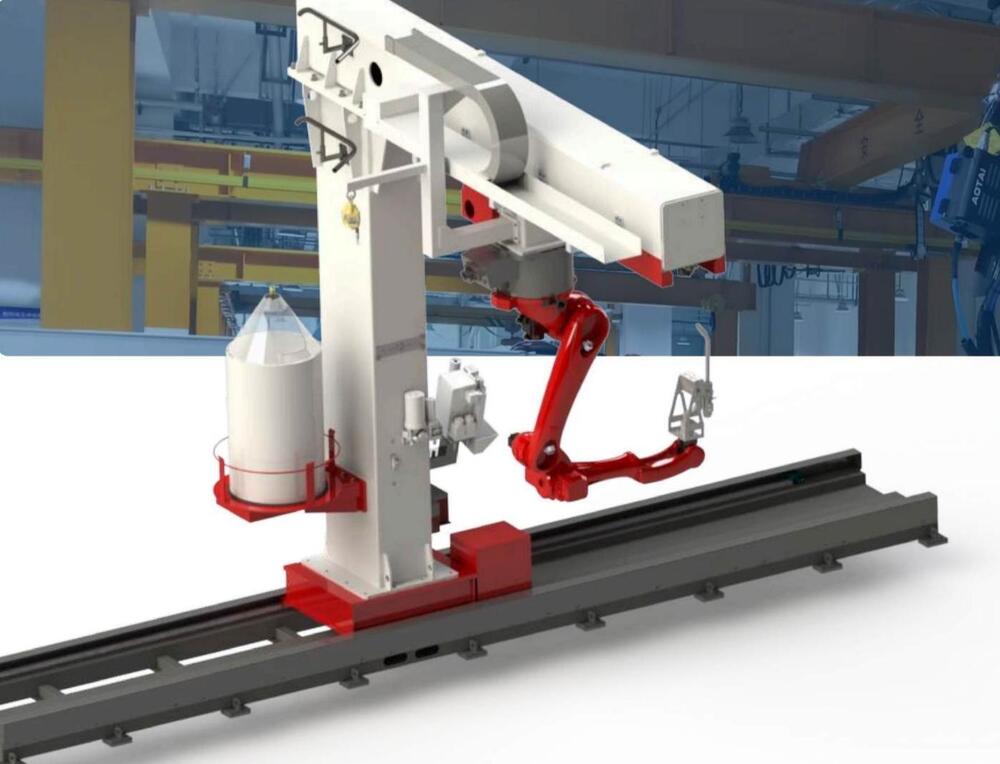
Tell us about your requirement

Price:
Quantity
Select Unit
- 50
- 100
- 200
- 250
- 500
- 1000+
Additional detail
Mobile number
Email

More Products in Robot Welding Machine Category
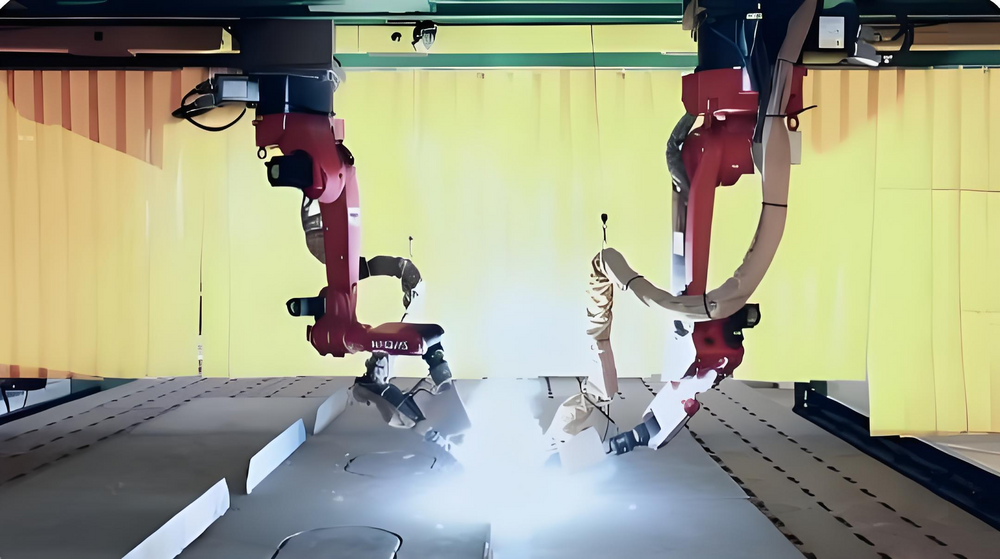
High Efficiency No-Teach Welding Robot Using Visual Recognition
Price 23100 USD ($) / Unit
Minimum Order Quantity : 1 Unit
Feature : Low Energy Consumption, High Speed, High Precision
Warranty : Yes
Product Type : High Efficiency NoTeach Welding Robot Using Visual Recognition
Table Size : Customizable as per requirement
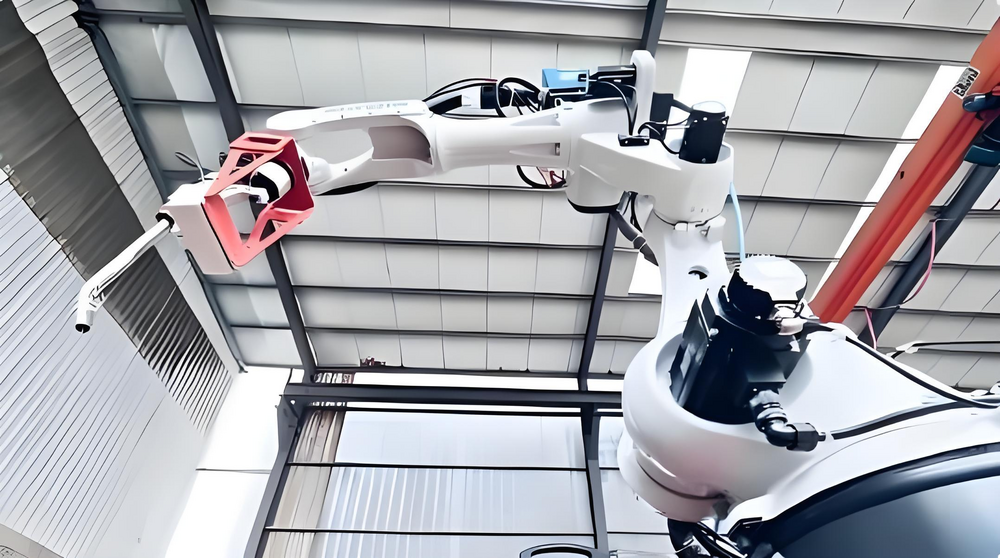
Automatically Plans The Welding Path No-Teach Welding Robot Using Visual Recognition
Price 23100 USD ($) / Unit
Minimum Order Quantity : 1 Unit
Feature : Low Energy Consumption, High Speed, High Precision
Warranty : Yes
Product Type : Automatically Plans The Welding Path NoTeach Welding Robot Using Visual Recognition
Table Size : Customizable based on installation
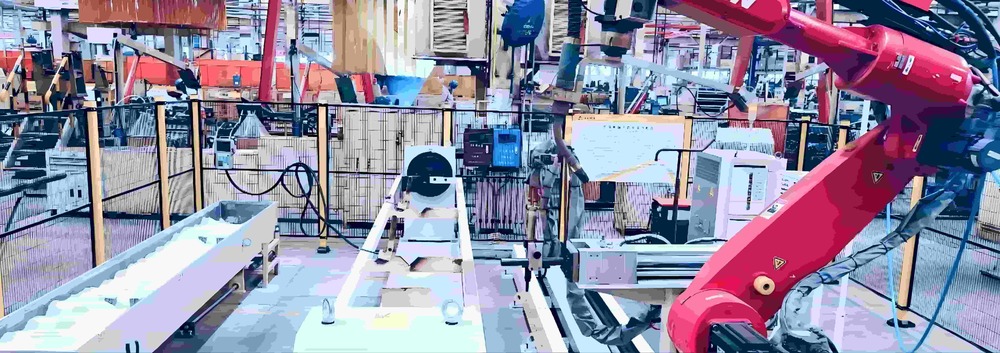
1465mm,2010mm Arm Span A Robotic Welding Workstation 12KG Load Capacity
Price 155000 USD ($) / Unit
Minimum Order Quantity : 1 Unit
Feature : Low Energy Consumption, High Speed, High Precision
Warranty : Yes
Product Type : 1465mm,2010mm Arm Span A Robotic Welding Workstation 12KG Load Capacity
Table Size : Customizable
Servo-Driven CNC Gantry-Type Welding Robot For Hip Assembly Components
Price 10000 USD ($) / Unit
Minimum Order Quantity : 1 Unit
Feature : Low Energy Consumption, High Speed, High Precision
Warranty : Yes
Product Type : ServoDriven CNC GantryType Welding Robot
Table Size : Customizable based on workpiece size

 Send Inquiry
Our Products


2301, Building 1, Fortune Plaza, No.2177, Tianchen Road,Jinan - 250000, Shandong, China
 : 8613306412803

Mr Gaven
(Marketing Director )
Mobile :+8613306412803
 Send Inquiry
 Call Me Free

Developed and Managed by Infocom Network Private Limited.
