
Call us now :+8613306412803
 Send Inquiry
 Send Inquiry
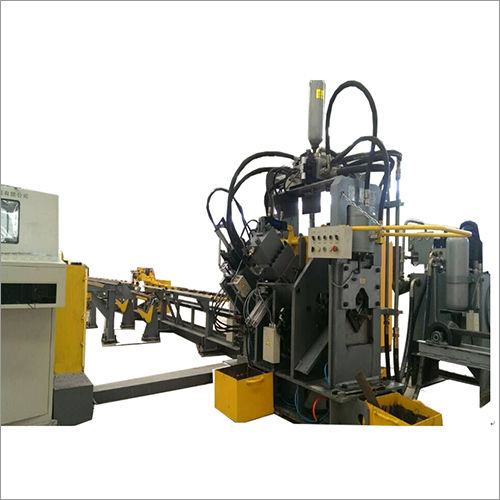
Weld The Base Of Transmission Towers Use Cnc Tower Foot Welding Robot 2pcs Worktables
Price 30000 USD ($)/ Unit
MOQ : 1 Unit
Weld The Base Of Transmission Towers Use Cnc Tower Foot Welding Robot 2pcs Worktables Specification
- Product Type
- Weld The Base Of Transmission Towers Use Cnc Tower Foot Welding Robot 2pcs Worktables
- General Use
- Base Welding of Transmission Towers
- Material
- Suitable for Steel, Alloy Steel Bases
- Type
- Robotic Welding Cell
- Capacity
- Heavy Duty - Up to 1000 kg Workpiece
- Weight (kg)
- Approx. 2500 kg
- Computerized
- Yes, Full CNC System
- Automatic
- Fully Automatic Operation
- PLC Control
- Yes, Integrated PLC System
- Power Source
- Electric
- Power Consumption
- Approximately 10-15 kW
- Rigidity
- High Structural Rigidity
- Voltage
- 380V / 415V, 3 Phase, 50Hz
- Motor
- AC Servo Motor
- Table Size
- 2pcs Worktables, Each Approx. 1600 mm x 1600 mm
- Spindle Speed
- Not Applicable (Welding Robot)
- Axial Choice
- Multi-Axis (Typically 6-Axis)
- Dimension (L*W*H)
- Approx. 3200 mm x 1800 mm x 2200 mm
- Feature
- Low Energy Consumption, High Speed, High Precision
- Color
- White and Blue
- Warranty
- Yes
- Application
- Power Transmission, Utility Infrastructure Fabrication
- Control Interface
- Touchscreen HMI with Program Storage
- Welding Method
- MIG/MAG (GMAW) or Customizable
- Safety Features
- Emergency Stop, Safety Enclosures with Sensors
- Welding Torch
- Water-cooled Robotic Welding Torch
- Fume Extraction
- Integrated Extraction Nozzle
- Programming Method
- Online & Offline Robot Programming Capability
- Cooling System
- Industrial Water Chiller
- Worktable Movement
- Programmable Indexing and Rotation
- Cycle Time
- Optimized for Fast Tower Foot Welding
Weld The Base Of Transmission Towers Use Cnc Tower Foot Welding Robot 2pcs Worktables Trade Information
- Minimum Order Quantity
- 1 Unit
- Supply Ability
- 10 Units Per Day
- Delivery Time
- 30 Days
Weld The Base Of Transmission Towers Use Cnc Tower Foot Welding Robot 2pcs Worktables About
Product Features:
1. Repeatability: The system ensures repeatability within 0.05 mm.
2. Tracking Accuracy: The tracking precision remains within 0.1 mm.
3. Mechanical Design: Arc welding robot featuring a durable and reliable mechanical structure, engineered to support extended continuous operation.
4. Working Range: Capable of handling workpieces up to 1500 mm in size.
5. Operating Mode: The workpiece is secured on a positioner fixture, while the welding head is mounted on a dedicated robot base. During welding, the positioner and robot operate in synchronization. By integrating robot vision scanning with a laser seam tracker, welding trajectories are automatically generated without manual programming. This allows for the welding of complex and irregular workpieces, ensuring straightforward operation and minimal training requirements.
Precision Welding for Tower Base Fabrication
The CNC Tower Foot Welding Robot is specifically designed for the rigorous demands of power transmission tower base welding. Its advanced MIG/MAG technology and programmable multi-axis movement enable precise, repeatable welds on heavy steel and alloy structures. The system streamlines transmission tower production, enhancing both throughput and quality.
Advanced Automation & User-Friendly Control
Equipped with a fully automatic CNC and integrated PLC system, this robotic welding cell simplifies operation through a touchscreen HMI with extensive program storage. Operators can leverage both online and offline robot programming, allowing maximum flexibility and efficiency in managing multiple welding processes.
Robust Safety and Environmental Features
Safety is paramount with features like emergency stop buttons, intelligent safety enclosures with sensors, and an integrated fume extraction nozzle. The water-cooling system supports continuous heavy-duty operation, while low energy consumption and high-speed capability reduce operational costs and environmental impact.
FAQ's of Weld The Base Of Transmission Towers Use Cnc Tower Foot Welding Robot 2pcs Worktables:
Q: How does the CNC Tower Foot Welding Robot optimize the transmission tower base welding process?
A: The robot automates welding with programmable indexing and rotation, ensuring precise, consistent results for heavy-duty steel and alloy bases. It streamlines cycle times and boosts productivity compared to manual welding.Q: What welding methods and materials are compatible with this robotic welding cell?
A: The system primarily supports MIG/MAG (GMAW) welding, known for high joint quality, and is also customizable for other methods. It's suitable for steel and alloy steel workpieces, accommodating base plates up to 1000 kg.Q: When should I choose automated robotic welding over conventional welding for tower bases?
A: Automated robotic welding is ideal when high output, repeatable quality, and safety are critical-such as in large-scale power transmission infrastructure fabrication, where speed and consistency directly impact project timelines.Q: Where is this welding robot typically deployed?
A: It is designed for transmission tower fabrication plants or utility infrastructure manufacturing facilities, particularly where high-volume or heavy-duty base welding is routine.Q: What safety and environmental features does the system include?
A: Safety measures include emergency stops, sensor-equipped safety enclosures, and integrated fume extraction to protect operators and the environment. The water-cooled torch and industrial chiller ensure safe, stable welding operations.Q: How is programming managed and is offline programming supported?
A: The robot features a touchscreen HMI for program selection and storage. Both online and offline programming are supported, enabling pre-production setup and rapid job changes for continuous workflow.Q: What are the main benefits of using this robotic welding cell?
A: Users benefit from higher welding speed, improved accuracy, reduced energy consumption, robust safety, and the ability to handle heavy-duty parts, all enabling more efficient manufacturing.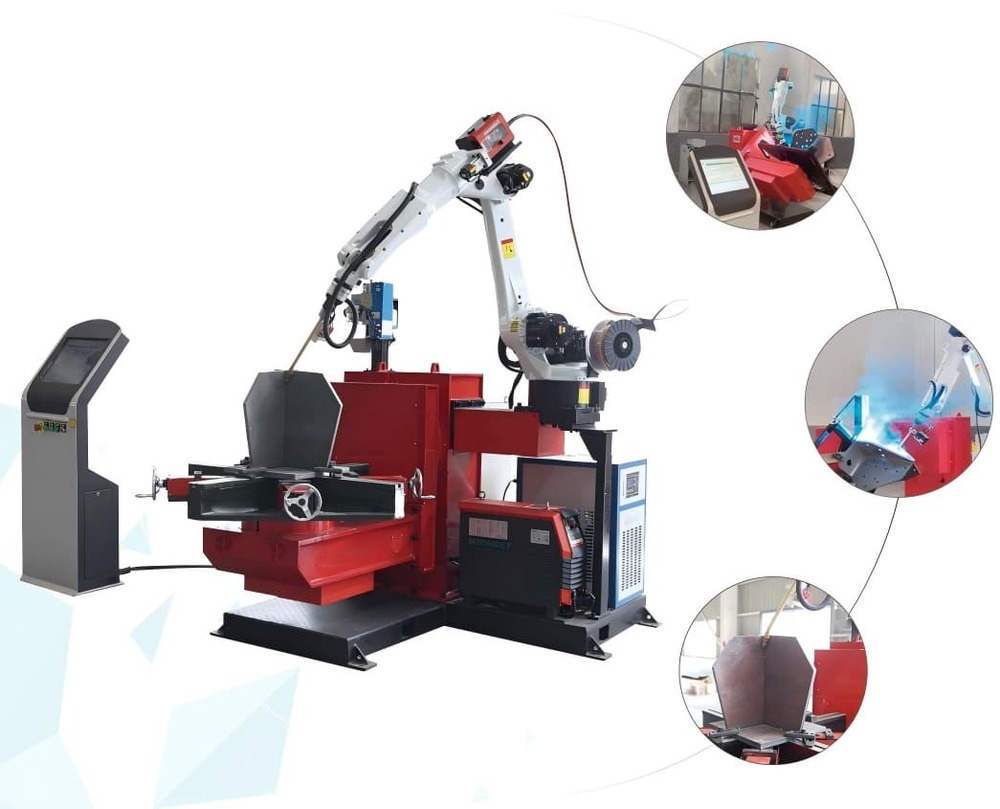
Tell us about your requirement

Price:
Quantity
Select Unit
- 50
- 100
- 200
- 250
- 500
- 1000+
Additional detail
Mobile number
Email

More Products in CNC Angle Machine Line Category
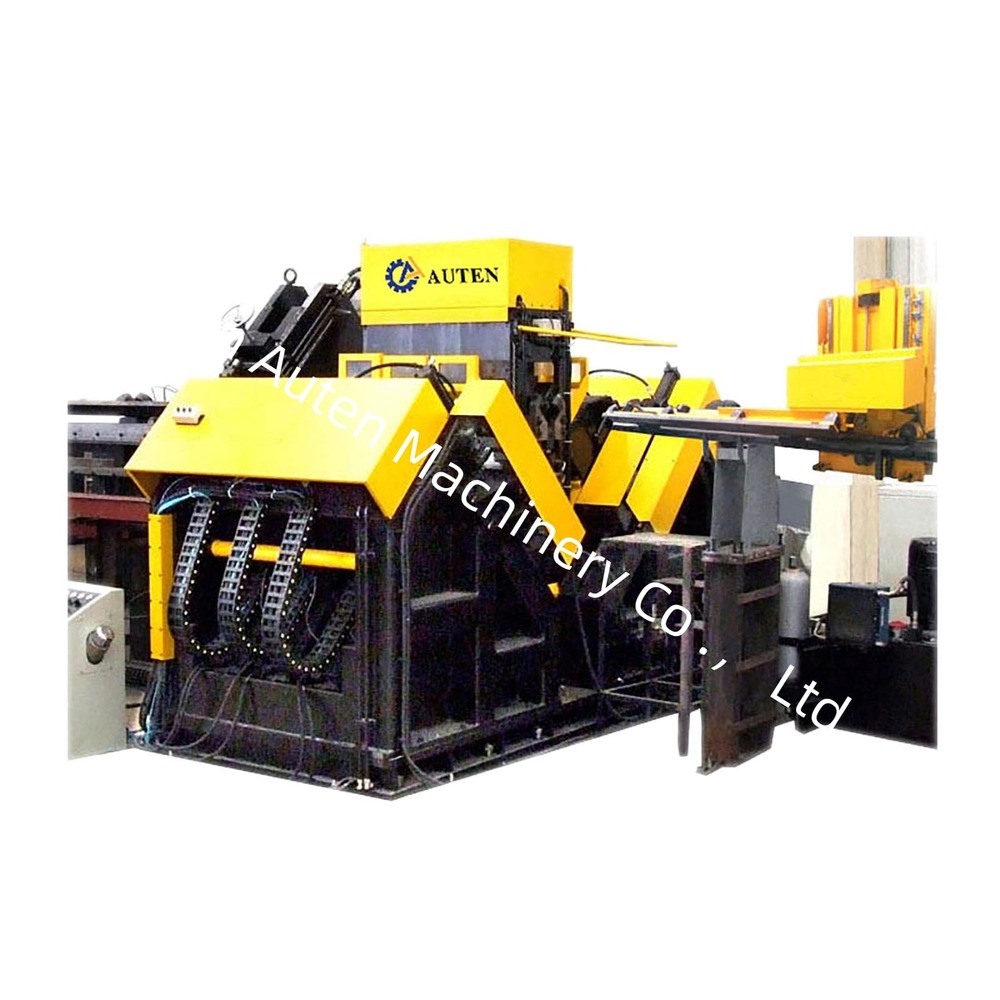
CNC Angle Metal Steel Drilling Marking and Tapping 6000r/min Spindle Rotation Speed Machine Line
Price 120000 USD ($) / Unit
Minimum Order Quantity : 1 Unit
Product Type : CNC Angle Metal Steel Drilling Marking and Tapping 6000r/min Spindle Rotation Speed Machine Line
Warranty : Yes
Automatic : Other, Fully Automatic
Power Source : Electric
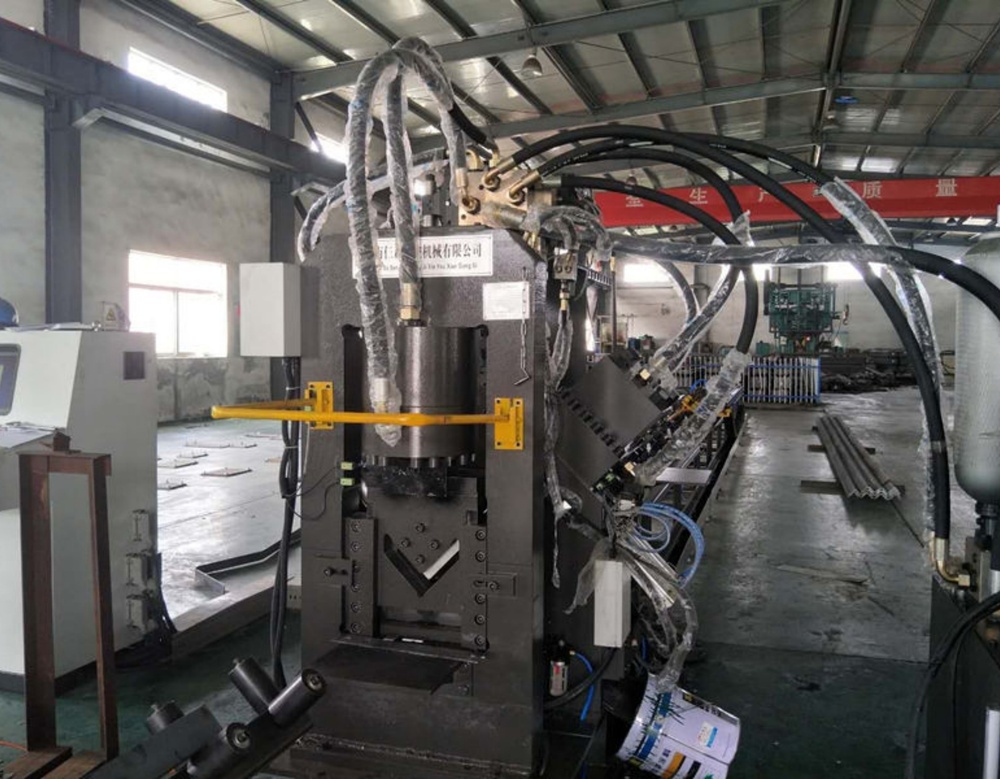
5~50ml/H Fuel Consumption CNC Angle Drilling And Marking Machine 1000KN Marking Force
Price 65000 USD ($) / Unit
Minimum Order Quantity : 1 Unit
Product Type : CNC Angle Drilling and Marking Machine
Automatic : Other, Fully Automatic
Power Source : Electric
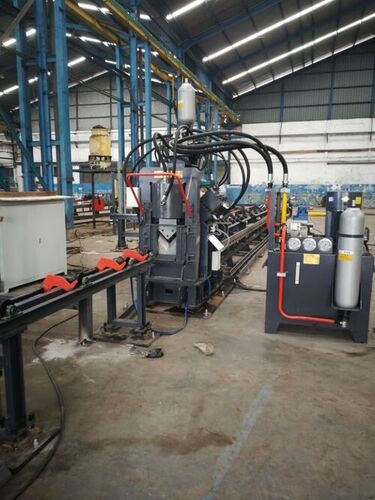
High Speed CNC Punching Marking And Cutting Machine Line For Angle Bars
Price 50000 USD ($) / Set
Minimum Order Quantity : 1 Set
Product Type : cnc angle punching machine
Warranty : Yes
Automatic : Yes
Power Source : Hydraulic
High Speed CNC Angle Punching Marking And Cutting Machine Line Model JNC125
Price 61000 USD ($) / Unit
Minimum Order Quantity : 1 Unit
Product Type : CNC Angle Punching Marking And Shearing Machine
Warranty : Yes
Automatic : Yes
Power Source : Electric

 Send Inquiry
Our Products


2301, Building 1, Fortune Plaza, No.2177, Tianchen Road,Jinan - 250000, Shandong, China
 : 8613306412803

Mr Gaven
(Marketing Director )
Mobile :+8613306412803
 Send Inquiry
 Call Me Free
Developed and Managed by Infocom Network Private Limited.
